
Field Notes · Bengal
The Fish Wedding That Led Us to Bengal
A small painting of a fish wedding sparked a question. The question became a conversation. The conversation led us to Prabir, a Pattachitra artist in West Bengal — and to a tradition that is still very much alive.
June 22, 2026 · 9 min read · West Bengal
It Began With a Voice
We first came across a video of an artist singing while explaining a painted scroll from Bengal. There was something about it that was impossible to scroll past.
It wasn't just the artwork. It was the way the story unfolded through song — the painting and the performance seemed to belong together, one carrying the other forward, neither quite complete on its own.
We shared the video on Varnya's Instagram. To our surprise, it became one of the most engaging pieces of content we had ever posted. People watched. People listened. People asked questions. So did we.
The more we revisited the video, the more curious we became. What was this tradition of narrative scroll painting? Why was the artist singing? How were the paintings and the songs connected?
What began as admiration slowly became research. Research became conversations. And those conversations eventually led us to Prabir and his family, a Chitrakar household whose artistic tradition stretches across generations in West Bengal.
Through photographs, videos, and long exchanges across patchy networks, we discovered that the paintings were only part of the story. Behind them were songs, natural pigments, family histories, and a living tradition that continues to evolve today.
“What began as admiration slowly became research. Research became conversations.”
About Bengal Pattachitra
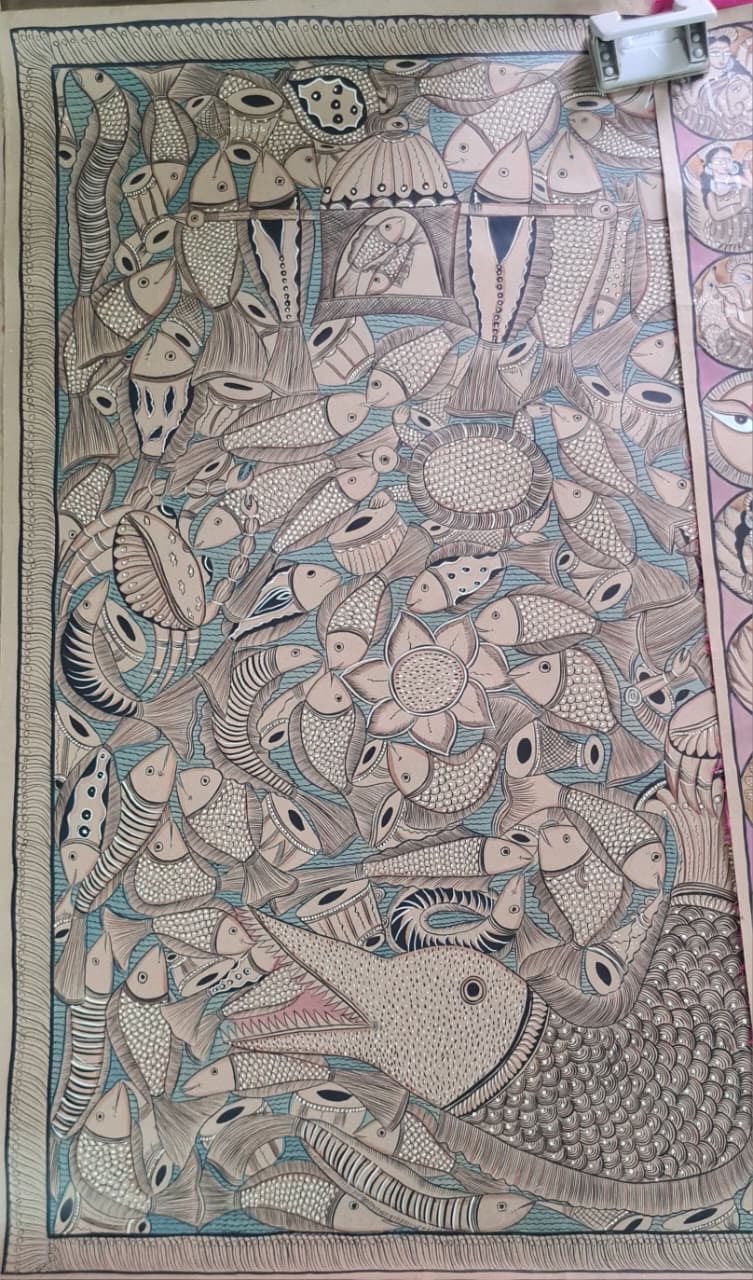
Bengal Pattachitra is one of India's oldest surviving narrative art forms and a defining strand of traditional Indian folk art. The word itself is a quiet description of what it is: patta, meaning cloth, and chitra, meaning picture. A long strip of cloth, layered with paper and tamarind paste, is painted panel by panel until it becomes a scroll that can be unrolled in front of an audience.
What makes Pattachitra unusual — and, to us, deeply moving — is that it was never meant to be only looked at. Every scroll is paired with a song called Pater Gaan, composed and sung by the artist as the scroll is slowly unfurled from top to bottom. The painting holds the imagery; the song carries the story. The two are made to be experienced together.
The artists who carry this tradition are known as Patuas or Chitrakars. For generations, they have travelled village to village with their scrolls rolled up under their arm, performing stories drawn from mythology, folklore, history, and increasingly from the world around them — harvests and floods, weddings and migrations, news that travels faster than most painters can keep up with.
The colours are made by hand from flowers, seeds, leaves, and fruits, bound together with the pulp of the wood-apple. The songs are taught at home. The painting is taught at home. The whole tradition lives, still, inside the rhythms of family life.
A Conversation Leads to Bengal
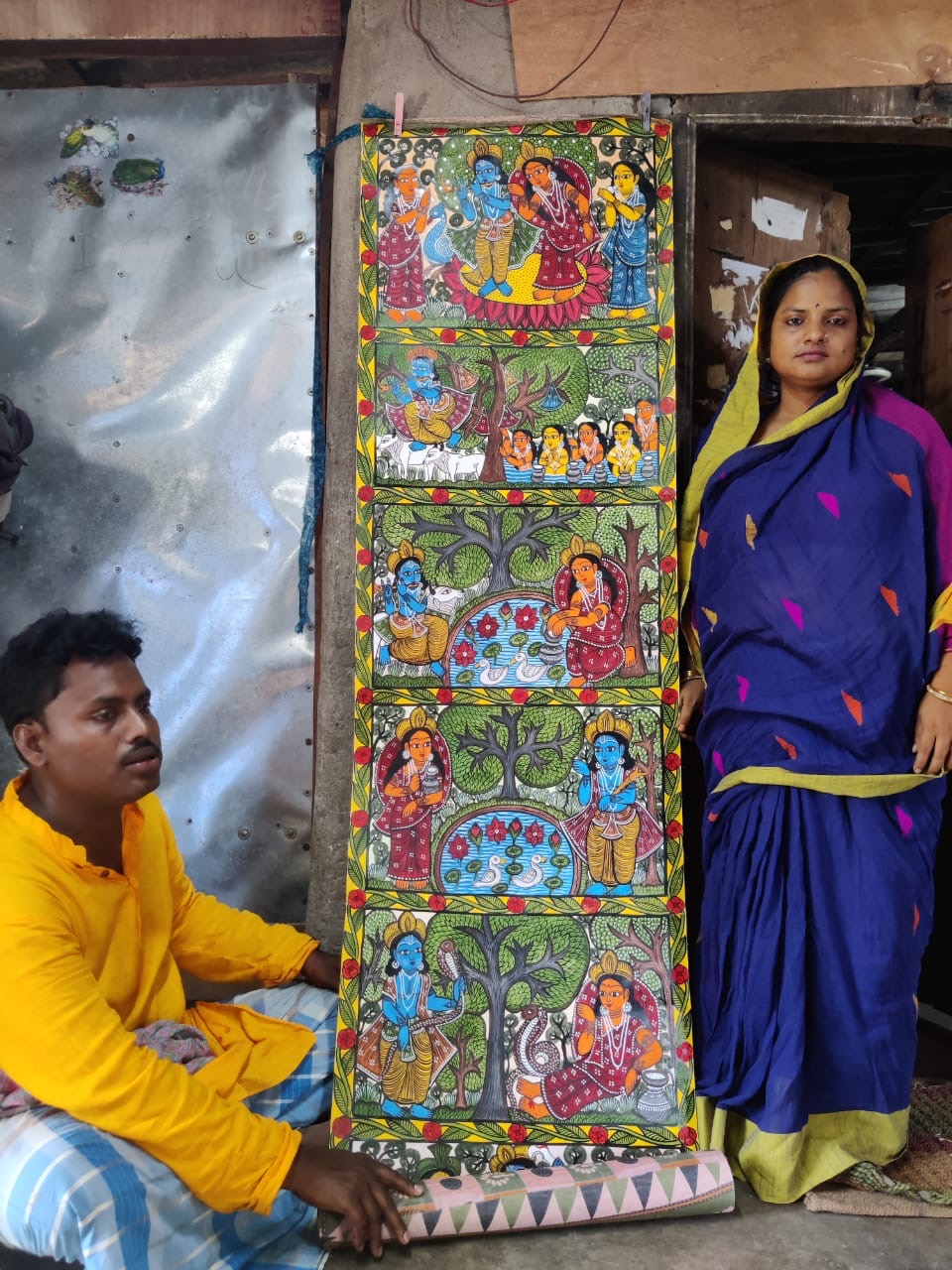
Curiosity led to conversations. Conversations led to introductions. And introductions, after a long looping route through friends-of-friends, eventually led us to Prabir Chitrakar — a Pattachitra artist in West Bengal, and the voice behind the video that had first stopped us.
Prabir paints. His wife paints. Several members of their family paint. The tradition has been moving through their Chitrakar household for generations — taught not in a classroom but at the edge of a courtyard, the way recipes and lullabies are taught. Today, they still travel together for workshops and craft fairs across India, carrying their scrolls rolled up in cloth bundles, unrolling them in unfamiliar cities for audiences who have often never seen anything like them.
He was patient with us. He answered our questions in the easy way of someone who has answered them many times before, and who still loves the answers.
More Than Paintings
We thought we were calling about a painting. We weren't.
Over the next few weeks, through photographs and short videos sent across patchy networks, Prabir began to share much more than artwork. He sent pictures of his family at work. Clips of pigments being mixed. Glimpses of half-finished scrolls drying in the sun. A short voice note explaining what a particular border meant.
Slowly, the painting we had first fallen for stopped being an object and became something else — a small visible piece of a much larger, much older way of living. Behind every scroll, we realised, there were people, songs, hands, kitchens, and an entire tradition keeping itself quietly alive.
Colors from Nature
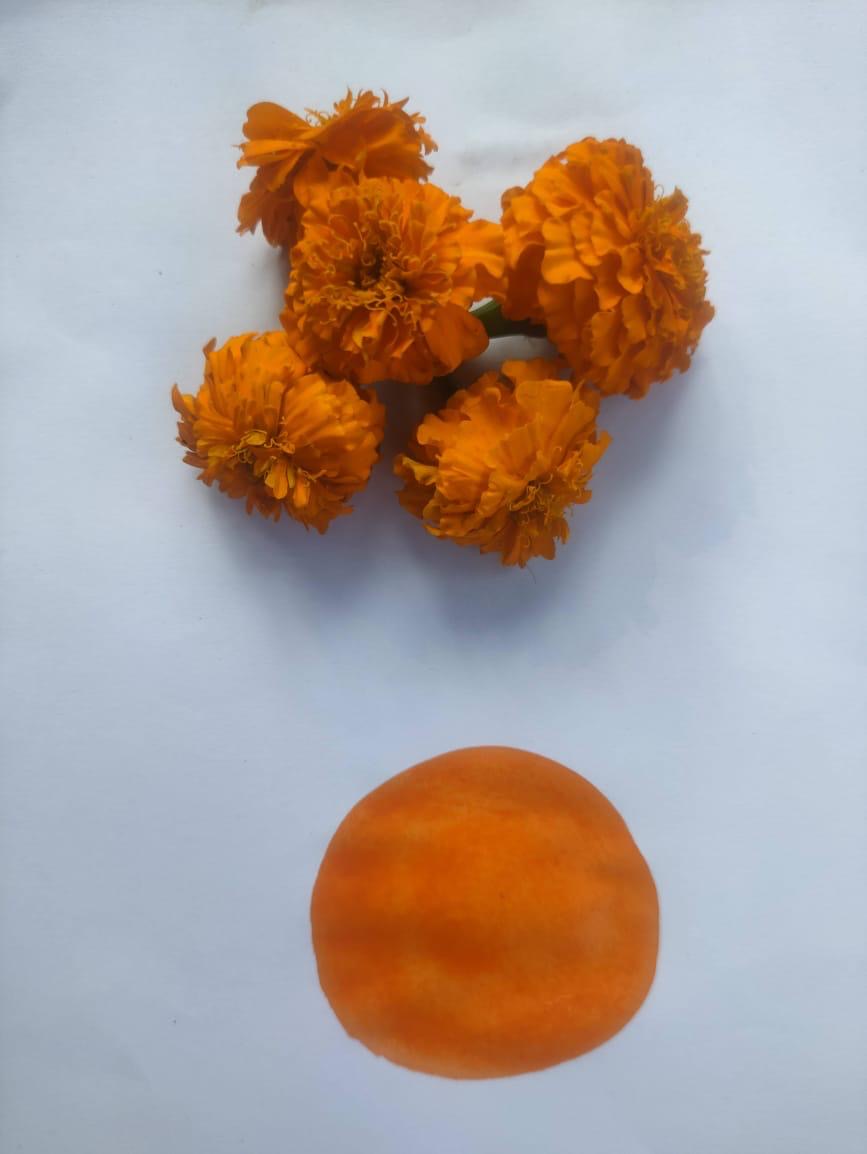
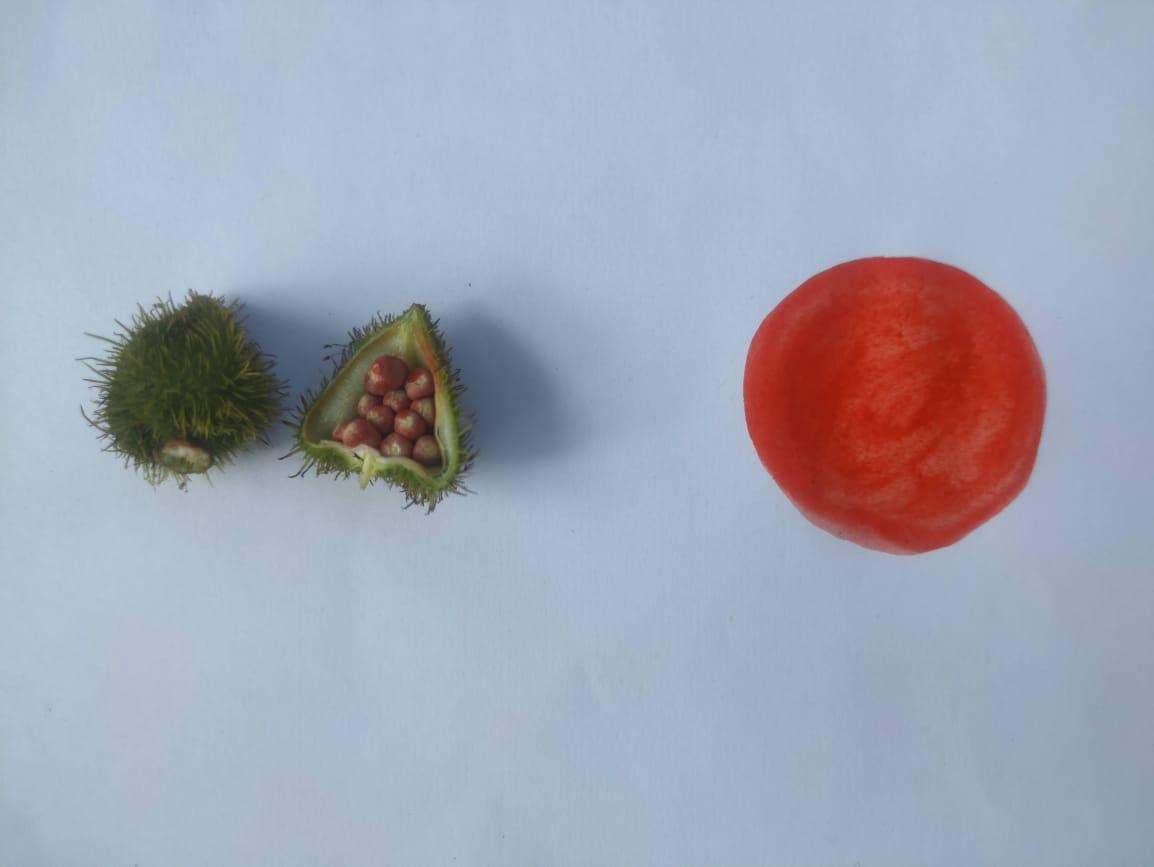
Nothing in a Pattachitra scroll comes from a tube. In this tradition of natural pigment painting, every colour on the page begins in a field, a flower, a seed, a leaf — something that grew nearby and was carried home in a corner of a sari.
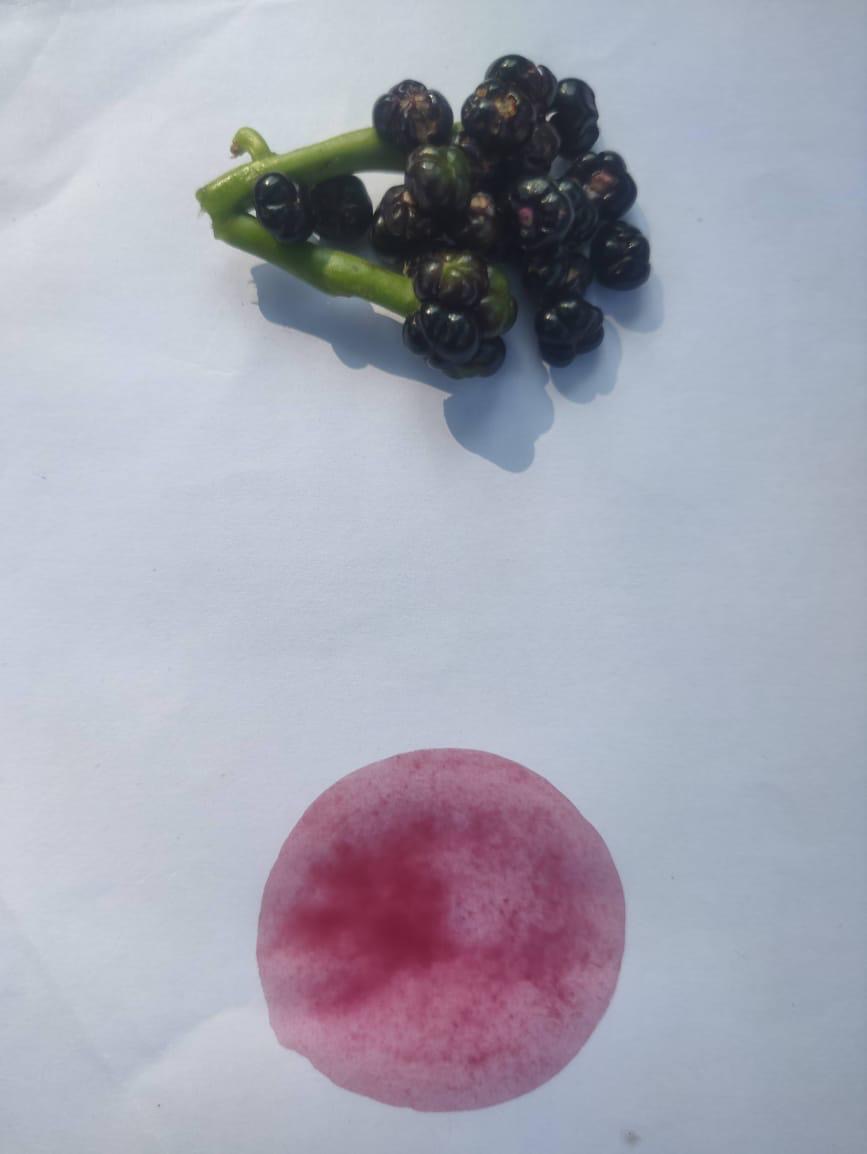
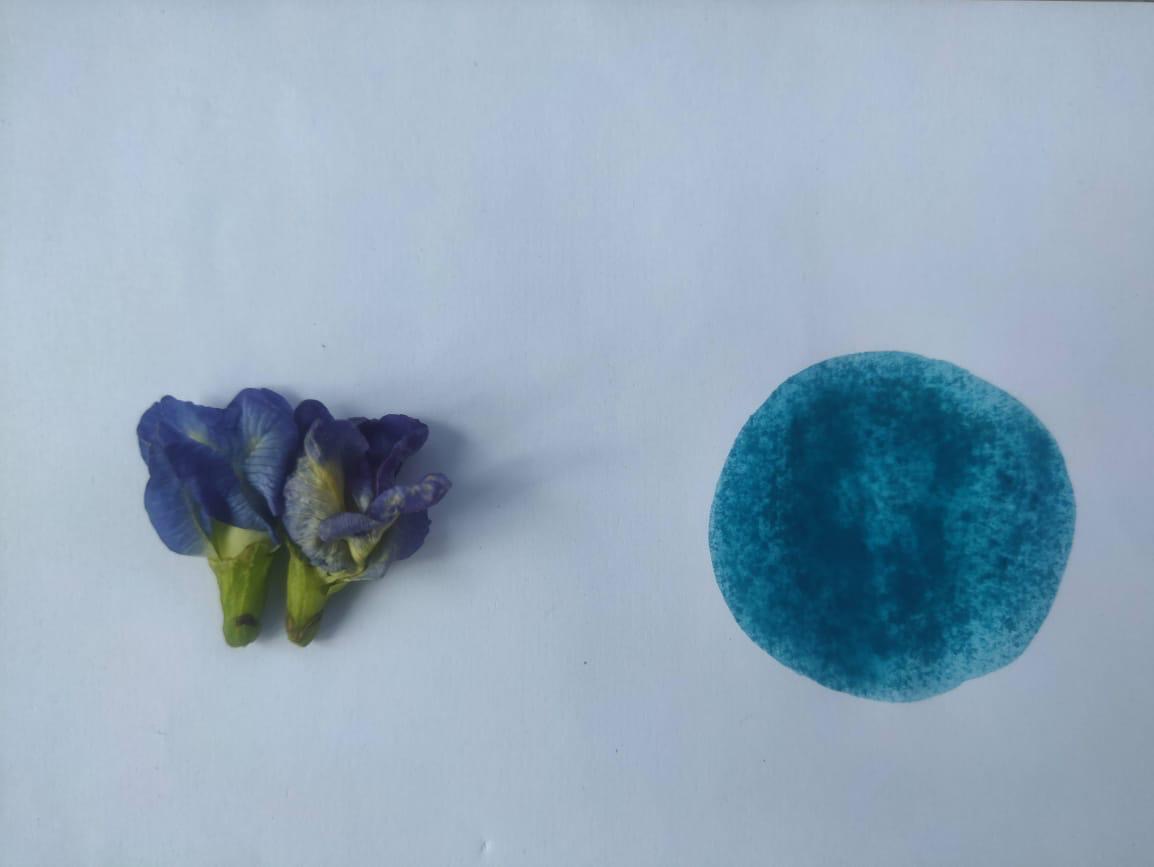
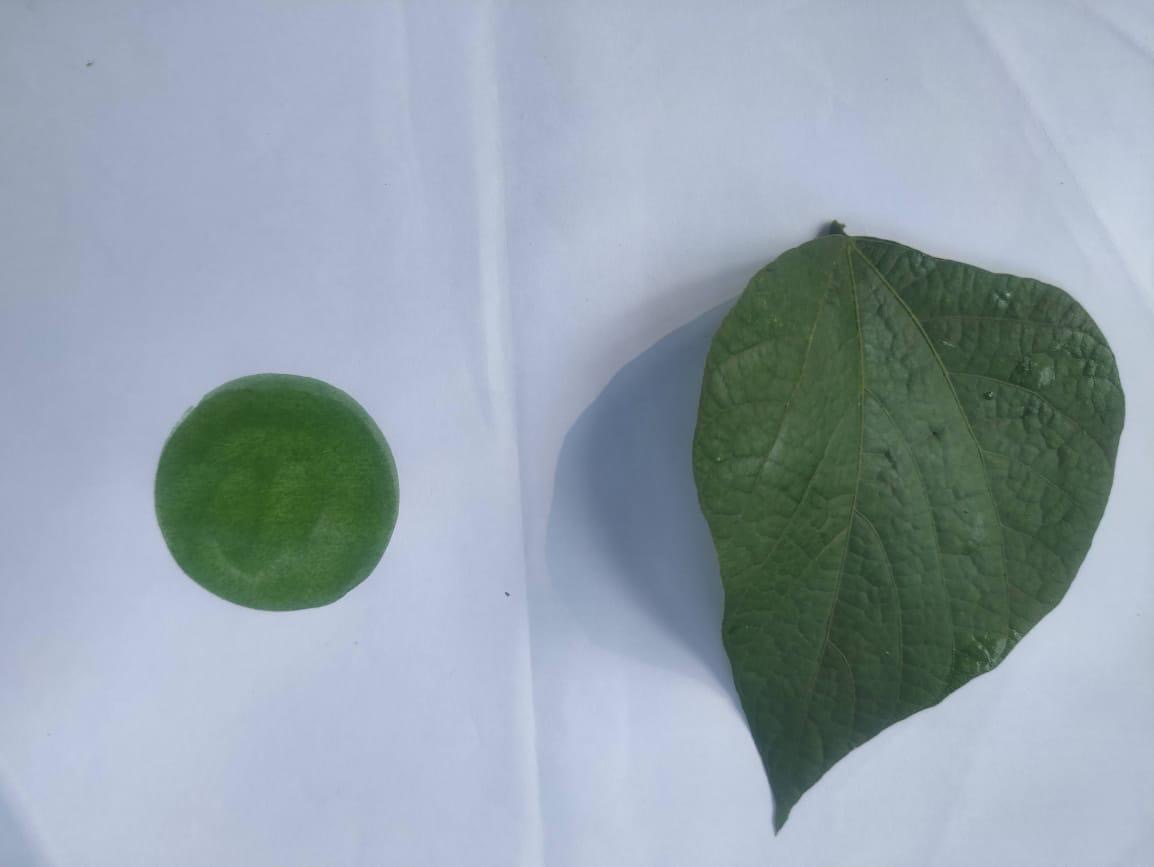
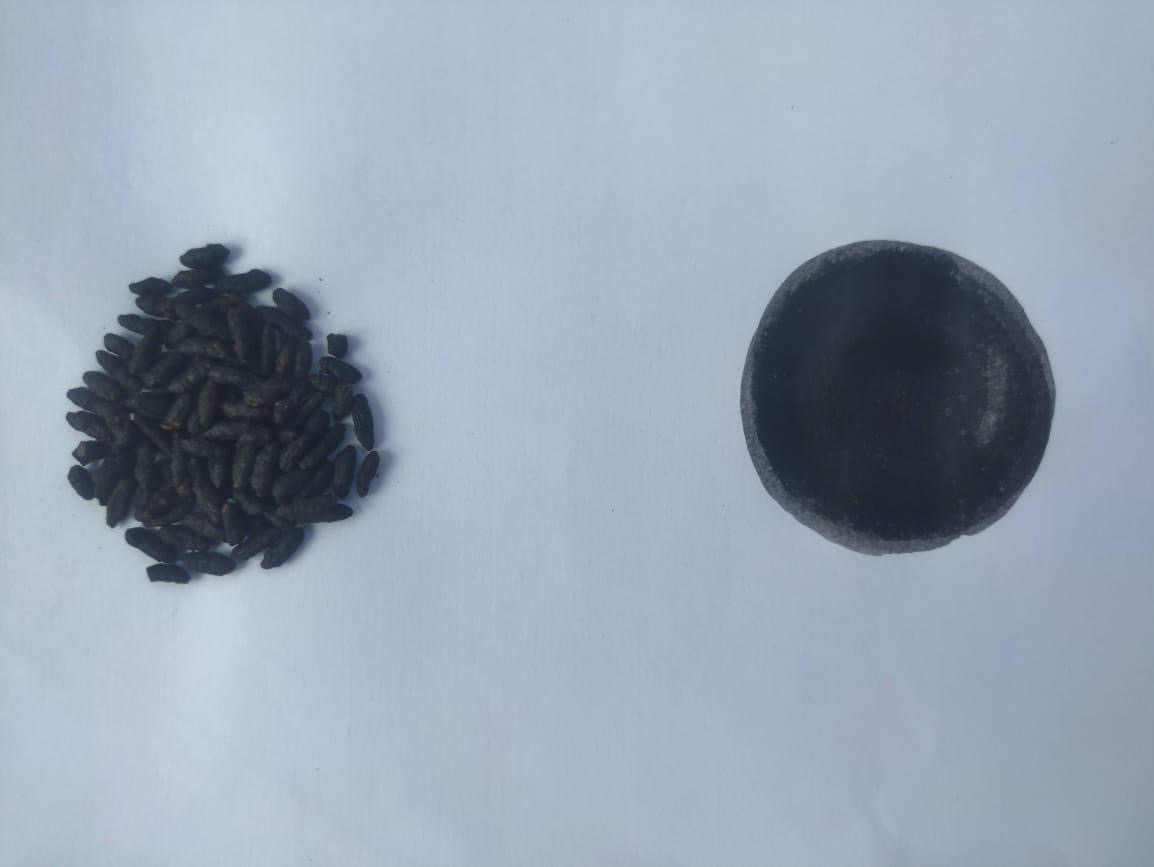
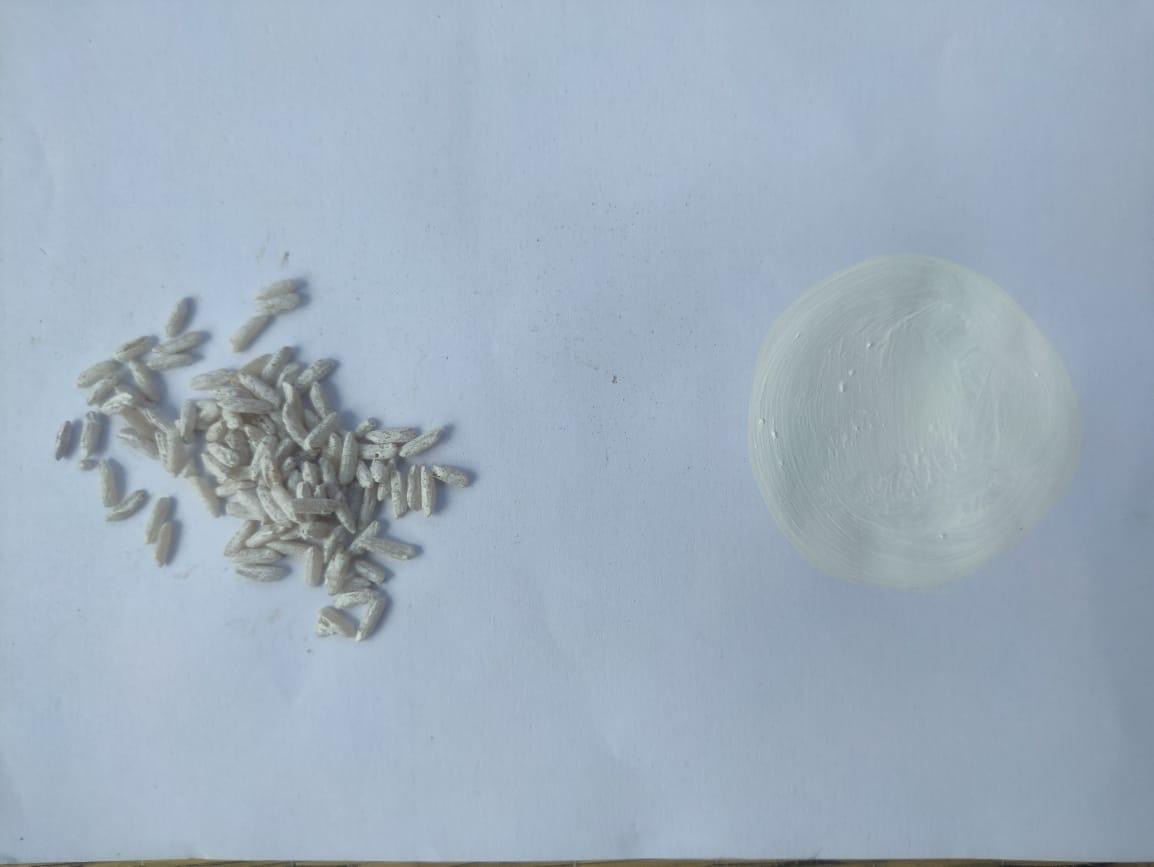
Orange from marigold petals, boiled down until the water runs the colour of saffron. Red from annatto seeds, cracked open from their spiky pods. Pink from small dark berries. Blue from aparajita, the butterfly-pea flower, crushed and strained through cloth. Green from a single hand-pounded leaf. Black from seeds charred over a low flame. White from puffed rice, ground to a soft chalky paste.
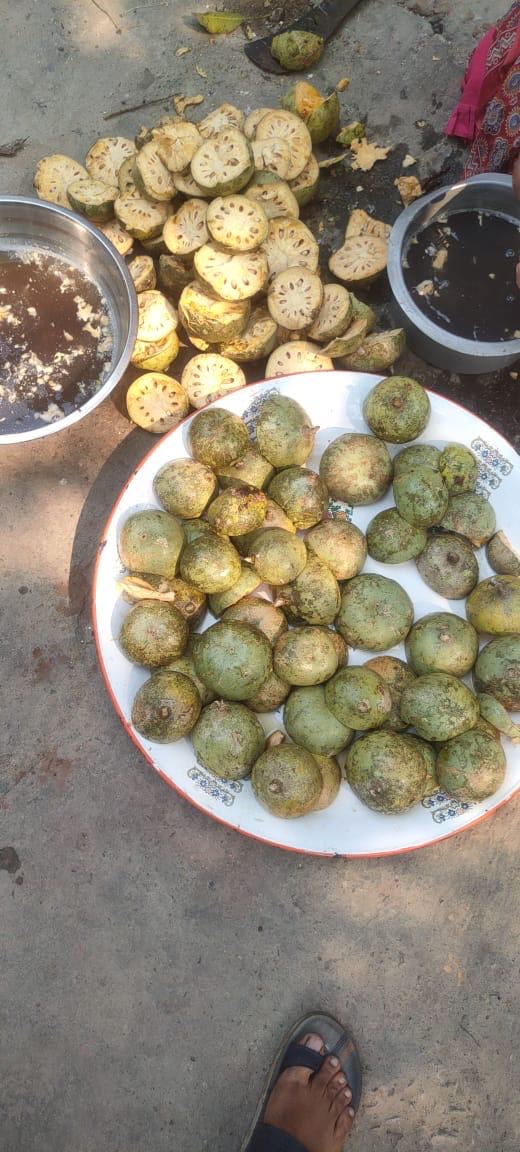
And binding all of it together: bel — the wood-apple — split open, its sticky pulp soaked overnight until it turns into a dark, fragrant glue that holds the colours to the page without cracking.
Stories That Are Sung
A Pattachitra is not only painted. It is sung.
Every scroll has a Pater Gaan — its own song — composed by the artist and performed in front of an audience as the scroll is slowly unrolled from top to bottom, one panel at a time. The painting sets the scene; the song carries the story forward.
Prabir sent us a video of himself presenting the fish wedding painting through song and narration. Then he sent another — this time alongside his daughter, the two voices folding into each other, a tradition being handed across in real time, without ceremony, simply because that is how it has always been done.
“The painting holds the imagery; the song carries the story.”
A Living Tradition
It is easy to think of traditions as things kept in museums — framed, labelled, behind glass. What our conversations with Prabir gently rearranged for us is the opposite idea: that the most enduring traditions are the ones that never sit still. They live in courtyards and kitchens. They are passed from mother to daughter, father to son, neighbour to neighbour. They survive because someone still sings them on an ordinary Tuesday afternoon.
Pattachitra is alive not because it has been preserved, but because it is still being practised — in homes, at fairs, on the floors of village workshops, in the easy back-and-forth between a parent's voice and a child's.
“The most enduring traditions are the ones that never sit still.”
Closing Reflection
We began by looking for a painting.
We left with a deeper appreciation for the people, songs, stories, and generations that keep traditions alive.
The fish wedding was a painting. Prabir and his family were the story behind it.
At Varnya, we hope to create more of these connections between contemporary homes and the artists carrying India's living traditions forward.
We are grateful we got to listen.
For us, these conversations are about more than objects. They are about helping preserve awareness of India's rich artistic traditions — from Bengal Pattachitra to the many other artisan traditions across the country — while creating meaningful connections between artists and the people who value their work. Whenever possible, Varnya hopes to help bridge that distance.
Continue reading
The Craft Journal · Rajasthan